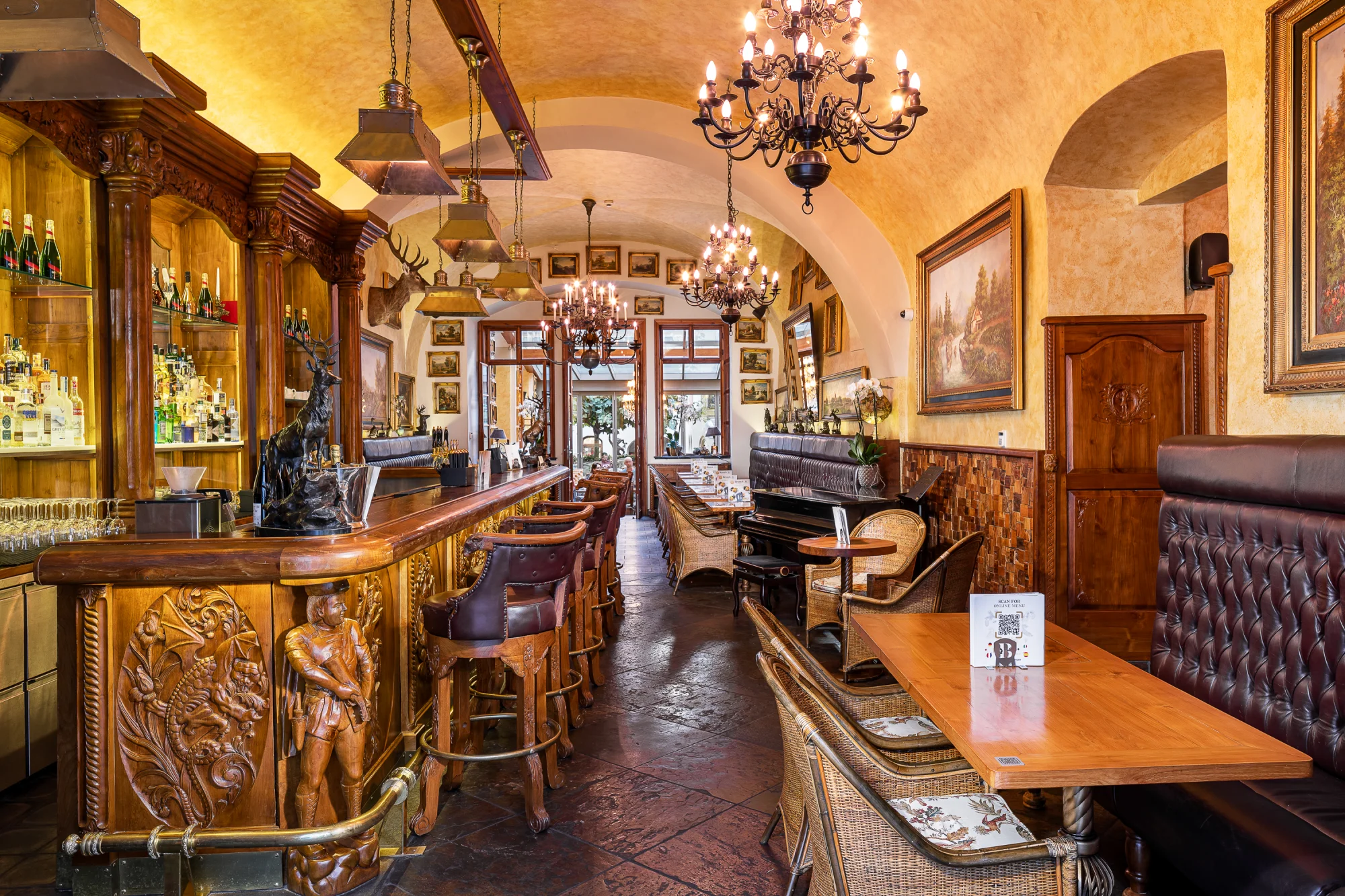
“Champagne goes with every dish,” says Richard Prošek from Deer Restaurant
Richard Prošek is one of those professionals who can connect the world of high gastronomy with absolute precision. As the operations manager of Deer Restaurant, he oversees the running of a venue where first-class service, a modern approach to fine dining and attention to detail are essential.

In this interview, he explains why guests should not feel restricted by established rules, how to approach wine pairing and why, in his opinion, champagne goes with almost everything.
How long have you been working at Deer Restaurant, and what has your professional journey been like?
I have been working as the operations manager at Deer Restaurant since 2016. But my journey began much earlier. Already in secondary school, I knew I wanted to work in fine dining. After graduating, I joined one of the most prestigious restaurants in Prague, where I had the opportunity to learn from an excellent team and gradually began to discover the world of wine as well. That was where I gained the foundation for my later specialisation.
How should a beginner find their way around the world of wine? Is there a simple rule?
It is ideal to start with lighter, simpler wines that are not too intense or heavy. Gradually, it is good to try more complex styles, more aromatic white wines or more structured red wines. The important thing is not to approach wine with fear. Taste, compare and find out what you truly enjoy. Taste is individual, and there are no “correct” preferences.

How important is wine temperature when serving? Can you tell when wine is too cold or too warm?
Temperature affects both the flavour and aroma of wine. Wine that is too warm brings out the alcohol and feels heavy, while wine that is too cold hides both flavour and aroma. At home, room temperature is usually quite high, so it is not ideal to leave wine standing on the kitchen counter for too long. Proper serving can significantly improve the taste of wine.
Does the price of wine reflect its quality? Is a more expensive wine always the better choice?
The price of wine usually depends on the origin of the grapes, the place where they are grown, the grape variety and the method of production. Time also plays a major role - for example, long ageing or precise work in the winery is naturally reflected in the price. These are aspects that often correspond to higher wine quality.
That does not mean, however, that the most expensive wine is automatically the best choice for every guest. It depends on personal taste, on what you expect from the wine and also on the specific dish you are pairing it with. Every wine has its own context.
DEER is known for its focus on game. How do you approach it from the perspective of wine pairing? And what would you recommend, for example, with venison or roe deer?
Game usually calls for red wines. Fuller-bodied wines with gentle tannins are ideal, as they support the meat without overpowering its flavour. Wines from Bordeaux or southern France often work very well.
If I had to choose one wine for the entire tasting menu, what should it be?
There is no single answer. In a multi-course menu, lighter and more intense dishes alternate, and one wine would not be able to highlight every course properly. The one thing I often say is this: champagne really does go with every dish.
Can wine also be paired with desserts, such as ice cream or sorbet?
Yes, definitely. Sweeter wines are especially suitable for desserts, for example Port or Tokaji. With fruit sorbets, lighter wines usually work better, depending on the flavour and the ingredients served with the sorbet.
Do sweet wines also have a place with main courses?
Sweet wines generally work best with desserts, because their higher sugar content pairs beautifully with sweet flavours. A typical example would be Port with chocolate, or Moscato d’Asti or German Riesling with more pronounced minerality, which are excellent choices for desserts.
For main courses, I would recommend sweet wines only in exceptional cases. At the moment, we have venison mousse on our tasting menu, which pairs beautifully with Mosel Riesling. It does have higher residual sugar, but also pronounced minerality, which allows it to harmonise with the dish without feeling heavy.
What is your view on natural or organic wines?
I see them as a natural part of modern winemaking. Young winemakers today travel, learn new methods and approaches to production, and it is only logical that these techniques are also making their way onto the Czech market.
What wines do you personally enjoy most? Do you prefer local or foreign wines?
I also enjoy Moravian wines, and I even have a personal connection to the region. My favourites include fuller-bodied wines, as well as German Riesling.
And if you could drink only one wine for the rest of your life, what would it be?
Definitely champagne. You can drink it every day.
More experiences, more benefits!
We value guests who return to us. As part of BHG Family, you gain access to member benefits and special offers across our restaurants, bars, and hotels.